Devlog, , 2 min read
Puzzles that can always be solved
Nothing ruins a puzzle game like a level that cannot be won. How we build levels backwards, let solvers play every one of them and grade how hard they are.
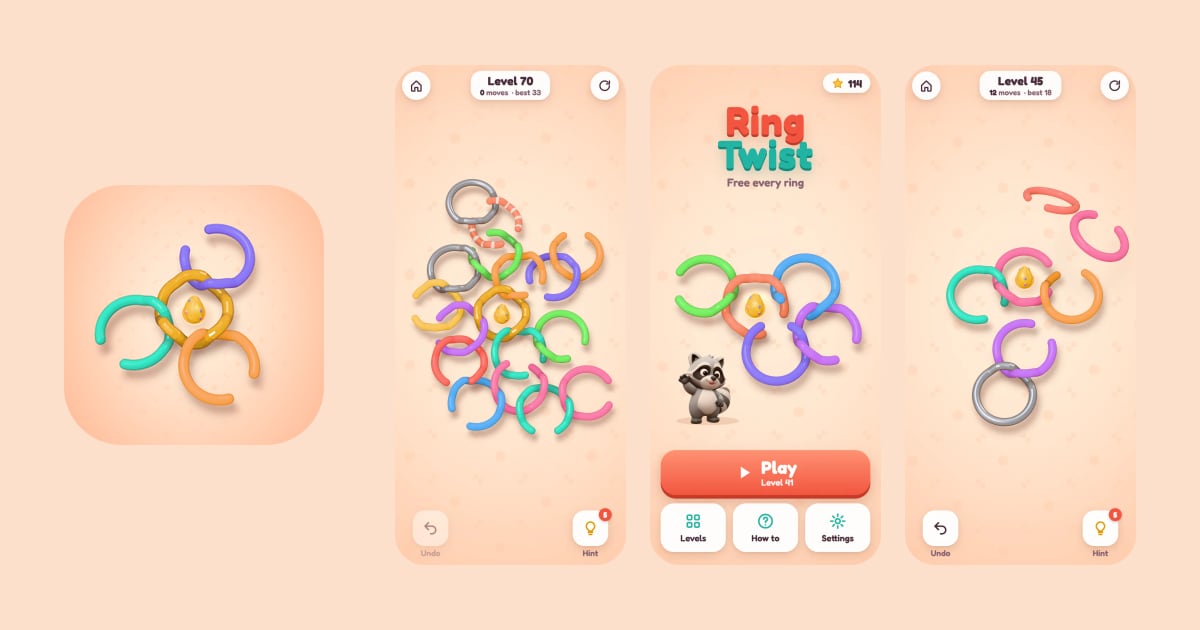
A puzzle game makes a promise: there is a way through. Every level in our new games keeps that promise, because a computer has checked it before it ships. These are the three tools we use most.
1. Build the level backwards
The simplest way to guarantee a solution is to build the level from its solution. In Surprise Cube we fill the box from the inside out. Each new block gets an arrow that points along a clear path out of the shape as it is so far. When the box is full, taking the blocks out in reverse order solves it, so every box can be emptied.
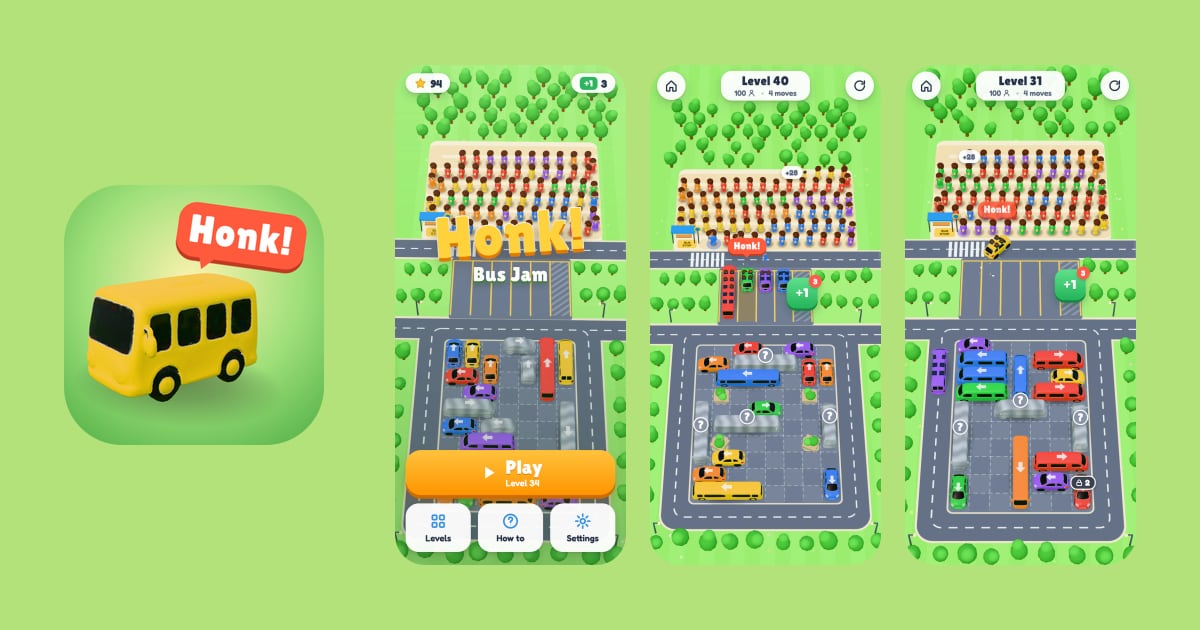
Honk! Bus Jam works the same way. Vehicles are placed one by one, each with a clear road out past the ones placed before it. The passenger queue is then built from a valid exit order, and a separate solver replays the level with the real number of waiting bays to make sure it still works.
2. Let a solver play every level
Some puzzles cannot be built backwards, so a solver plays them instead. Fishbowl and Ring Twist use exact solvers that find the fewest possible moves. That number becomes the level's par, and you get three stars for matching it.
In Cat Corner the solver does something stricter. It checks that every puzzle has exactly one solution, and that you can reach it by logic alone, without ever guessing. Boards that need a guess are thrown away.
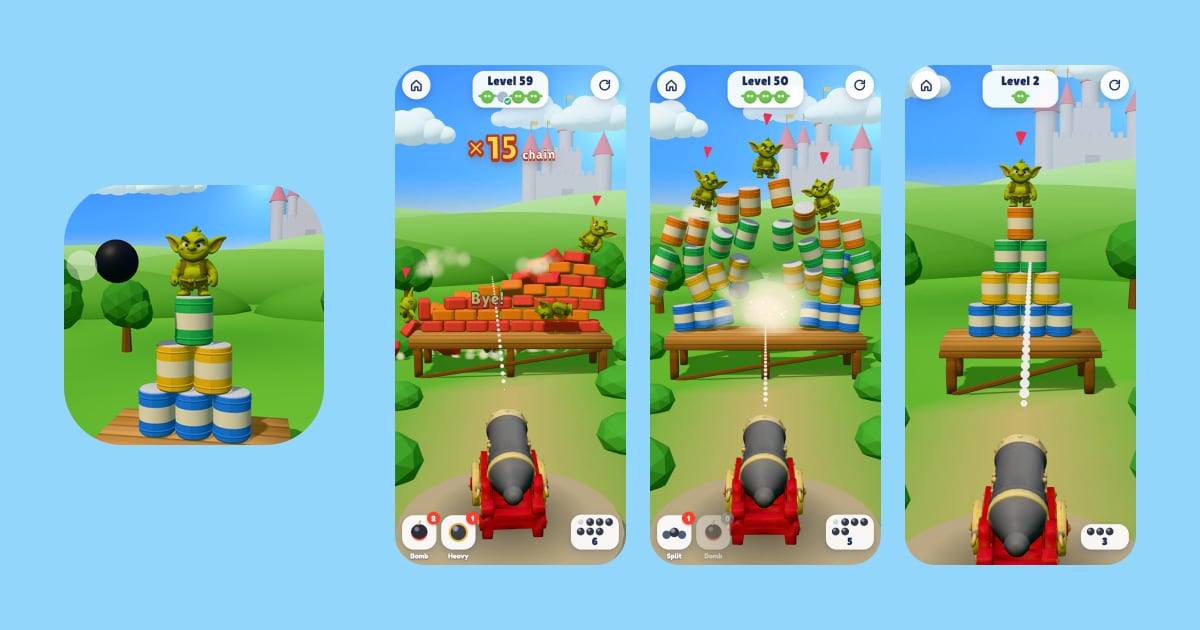
Topple! runs on physics, so its check is different: every level has to stand still on its own for a few seconds, and an autopilot has to clear it with the cannonballs you get.
3. Grade the difficulty
Solvable is not the same as fun. We grade every level by how much work it takes: how many logic steps in Cat Corner, how often a simulated casual player wins in Honk! Bus Jam and Pixel Bees. Then we order the levels so the difficulty climbs like a saw: a harder level, then a breather.
New twists, one at a time
New ideas such as hidden fish, padlocked rings or mystery vehicles first appear on an easy level, with a one-line tip. You learn the twist before it is used against you.
More from the devlog
All devlog posts
Devlog,
Our journey so far
From our first learning games for kids in March to eight cosy 3D puzzle games in October: how Savas Games has changed in its first seven months.
Devlog,
How we pick ideas: reading the store charts
Each of our eight new games started from the October 2026 top charts. How we read them, what we look for, and how we find a twist of our own.
Devlog,
Making it feel good
Squash and stretch, tiny haptic taps and slow motion for the biggest crash: the small details that make a puzzle feel good under your thumb.