Devlog, , 2 min read
From icons to pixel pictures
How the thirty pictures in Pixel Bees become grids of little cubes that a swarm of bees can carry away, colour by colour.
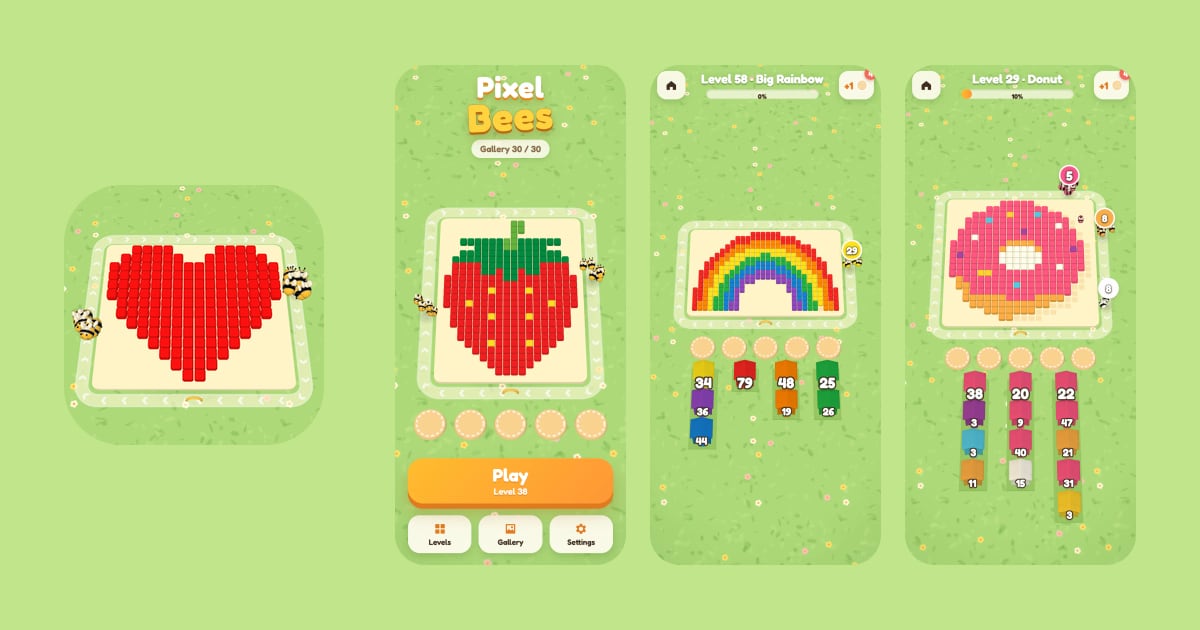
Pixel Bees is a puzzle about pictures made of cubes: a strawberry, a rocket, a whale, a snowman. Bees fly around the picture and carry away the cubes of their colour. For that to work, each picture has to become a grid that is easy to read, fair and fun to clear.
Thirty simple pictures
We start from thirty flat, simple illustrations with clear shapes and few colours: food, animals and everyday things. Flat art matters here. A picture with soft shading would turn into hundreds of nearly identical colours.
Down to a grid
Each picture is scaled down to a small grid, from 16 by 16 up to 28 by 28 cells. The small grids make quick early levels; the big ones become the later, harder versions of the same picture.
Fewer colours
Every colour in a picture needs its own hives and bees, so the palette has to be small. We group similar colours together until only a handful are left, then push colours that are too close apart in lightness, so you can always tell two hives apart at a glance. The white background is dropped and single stray pixels are cleaned up.
Exactly enough bees
When a level is built, the number of bees of each colour matches the number of cubes of that colour exactly. The puzzle is in the order: only the front hive of each column can fly, and bees with work left over wait in a small number of slots. A solver checks that every level can be cleared, and the levels are sorted by how often a casual player wins.
A golden finish
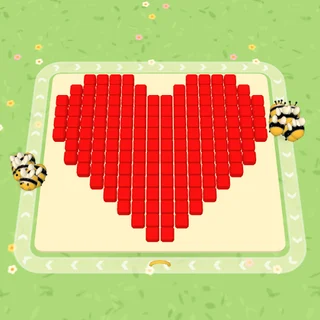
Clear the last cube and the picture re-forms in shining honey gold before it joins your gallery: a small reward that makes you want to clear the next one.
More from the devlog
All devlog posts
Devlog,
Our journey so far
From our first learning games for kids in March to eight cosy 3D puzzle games in October: how Savas Games has changed in its first seven months.
Devlog,
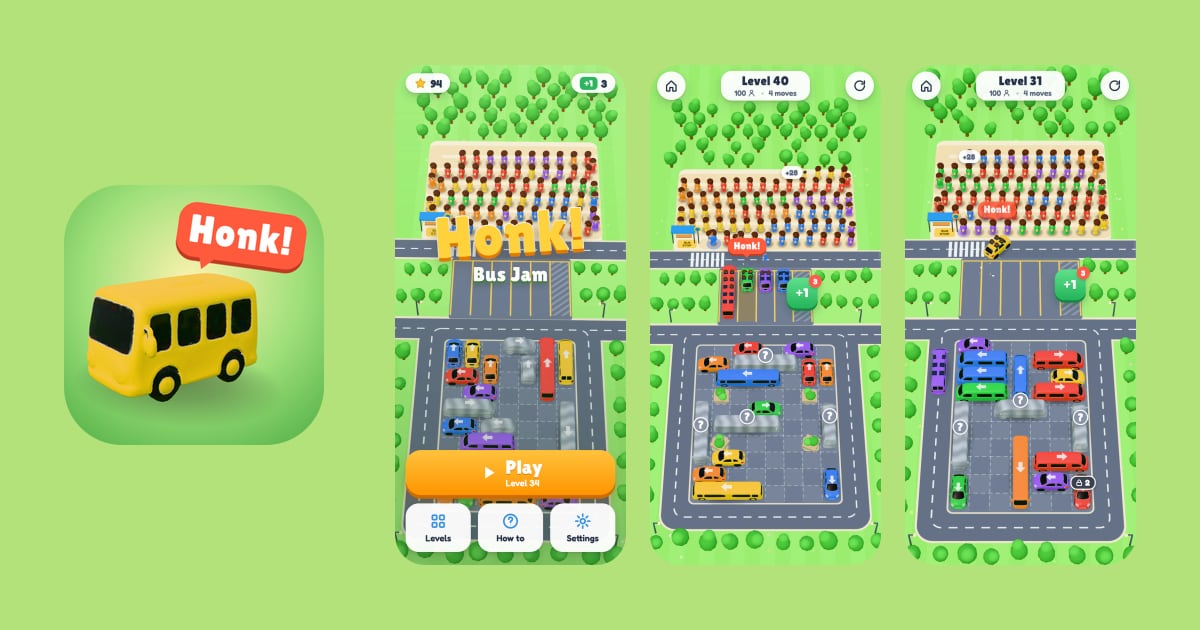
How we pick ideas: reading the store charts
Each of our eight new games started from the October 2026 top charts. How we read them, what we look for, and how we find a twist of our own.
Devlog,
Puzzles that can always be solved
Nothing ruins a puzzle game like a level that cannot be won. How we build levels backwards, let solvers play every one of them and grade how hard they are.